
Every organization goes through turbulent periods sooner or later: a key departure, a restructuring, a shift to hybrid work, a new manager. These transitions are not exceptional — they have become part of everyday team life.
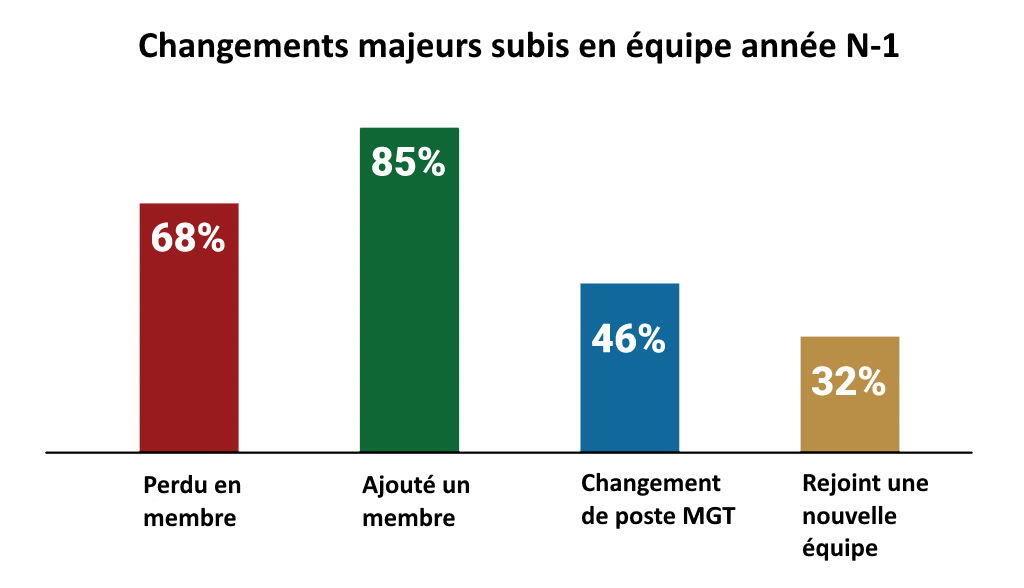
Yet their impact is often underestimated. A Wiley survey of nearly 5,000 working professionals found that the majority of teams have experienced significant changes in recent years: 68% lost a team member, 85% welcomed a new one, and 46% went through a change of manager. The numbers speak for themselves.
The real question is not whether your team will face a transition, but how you support it when it does. Here are 3 proven levers — and how Everything DiSC® can help you activate them concretely.
1. Rebuild Morale: Trust Comes First
When a team changes — whether through a departure, an arrival, or a reorganization — it is the collective culture that falters first. Established habits disappear. A sense of roles becomes blurred. And trust, built up over time, has to start over from scratch.
The same Wiley survey identifies difficulty maintaining trust as the most stressful factor during a team change — above workload or fatigue. This is significant: without trust, communication closes down, conflicts fester, and performance erodes quietly.
What DiSC changes concretely: Everything DiSC® gives every team member a shared language to understand one another, even after a change. By understanding their colleagues' natural tendencies — whether they lean toward the D, i, S, or C style — each person can adapt their communication and reduce the misunderstandings that inevitably arise during transitions.
A manager who understands that their new team member leans toward the S style will naturally give them time to settle in rather than pushing them straight into action. This kind of adjustment, simple as it sounds, makes a real difference in rebuilding the connection.
Practical lever: schedule a team session focused on Everything DiSC® profiles as soon as a significant change occurs. It is a way of opening the conversation without making it personal.
2. Re-establish Norms: Clarity as a Foundation
When teams change, expectations change too — but they are not always explicitly redefined. The result: everyone navigates by guesswork, with their own interpretation of what is expected. This is one of the main drivers of disengagement.
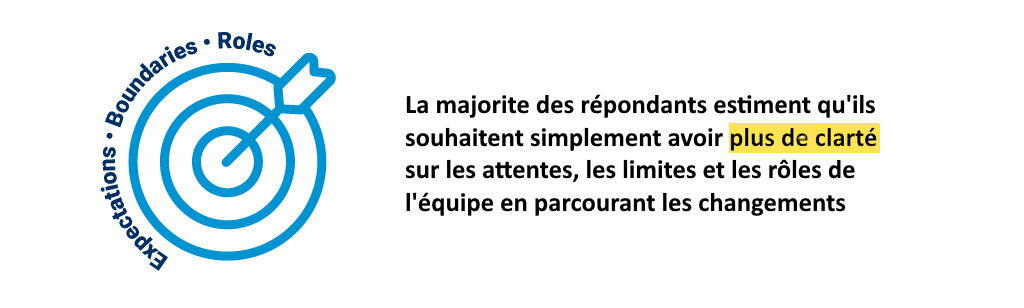
Wiley asked the question directly: what should your organization do to better support team transitions? The most common answer: more clarity on expectations, roles, and responsibilities.
What DiSC changes concretely: different behavioral styles have different needs when it comes to clarity. A profile leaning toward the C style needs precision and well-defined procedures. A profile leaning toward the i style works better with a big-picture view and room for autonomy. A profile leaning toward the D style wants to know quickly what is expected in order to move forward.
Understanding these tendencies allows a manager to communicate new norms in a way that truly resonates — not uniformly, but tailored to each person.
Practical lever: during a transition, do not assume expectations are understood because they were communicated once. Schedule short individual check-ins to make sure each team member knows exactly what is expected of them in the new context.
3. Re-evaluate Flexibility: A Lasting Retention Lever
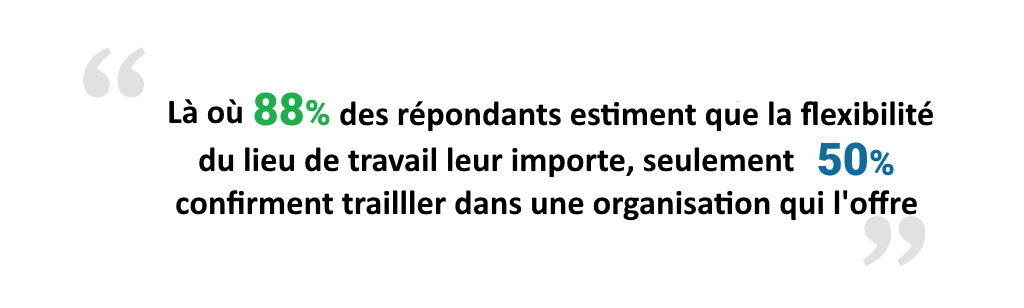
Flexibility is no longer a competitive advantage — it has become a baseline expectation for most professionals. 88% of Wiley survey respondents say workplace flexibility is important to them. Yet only half work in an organization that actually provides it.
The gap is significant. And it has a cost: those who have a flexible working environment report being considerably more satisfied with their work-life balance — and are, in fact, less likely to leave.
What DiSC changes concretely: hybrid work amplifies style differences. Those leaning toward the i style need to maintain social connection — creating moments for informal exchange is crucial for them. Those leaning toward the C style often appreciate the focus that remote work allows, but may struggle without structured feedback. Understanding these nuances allows you to design a flexible working arrangement that genuinely suits the team — not just on paper.
Practical lever: do not only ask "where do you want to work?" but also "how do you work best?" The answers, grounded in an understanding of DiSC styles, will help you build a flexible framework that works for everyone.
Transition as a Starting Point, Not an Obstacle
Periods of change within a team are uncomfortable. They are for everyone — manager and team member alike. But they are also rare moments when dynamics can be reshaped and a new culture built intentionally.
Rebuilding morale, re-establishing clear norms, re-evaluating flexibility: these three levers are not long-term projects. They are concrete actions you can take right now, with the right tools.
Everything DiSC® is one of those tools. Not because it provides ready-made answers, but because it gives your team a shared language to navigate change together — with more understanding, fewer frictions, and a common direction.
Is your team going through a transition and you want to know how DiSC can support you? Contact us — we would be happy to discuss your situation.
Data source: Wiley survey of nearly 5,000 working professionals.