
WHAT ISDiSC?
A self-assessment tool used by more than one million people each year to improve teamwork, communication, and productivity at work.
DiSC® helps you better understand people without judging or labeling them. Whether working individually or as a team, understanding where differences come from helps improve relationships at work. Human interaction is important—DiSC helps you strengthen it.
The Challenge in Interpersonal Relationships
When we disagree or have different perspectives on the same issue, we don’t always understand why this misunderstanding arises. This can easily lead to a dispute or to overly reserved behavior, which involves avoiding getting to the heart of the matter.
The Solution for More Productive Relationships
TheDiSC® model provides a common language that people can use to better understand themselves and those with whom they interact. Understanding where another person’s perspective comes from helps reduce disagreements and misunderstandings and improves working relationships.

WHY USE DiSC?

Six Practical Benefits for More Productive Interpersonal Relationships.
👥 Improve teamwork
In today's workplace, everything hinges on teamwork. With DiSC, you'll learn to communicate more effectively and better understand your teammates.
🤝 Making Disagreement Productive
With DiSC, turn a disagreement—or even a conflict—into a positive and productive exercise that helps your team move forward and achieve the right results.
🧭 Increase self-awareness
To learn effectively, you need to understand yourself. DiSC reveals how you respond to conflicts, what motivates or stresses you, and how you solve problems.
🎯 Managing Effectively
Once a leader has a better understanding of their employees’ preferences and work styles, they can inspire and be more effective with their peers, their team, and others.
📈 Boost Your Sales Skills
Use DiSC to improve your sales effectiveness. Understanding your customers’ preferences and adapting to them is essential for building relationships and closing deals.
⚖️ Facilitate without judging
People don't like being judged or singled out. With DiSC, the playing field becomes neutral by providing trainers and coaches with non-judgmental information.
THE DiSC THEORY AND ITS HISTORY
TheDiSC® behavioral model was first proposed in 1928 by William Moulton Marston. He never created a psychological instrument to measure his model: he wrote the DiSC personality theory, and the assessment was developed later by others—Walter Vernon Clarke, John Cleaver, John Geier, and, of course, Wiley, the publisher of Everything DiSC.
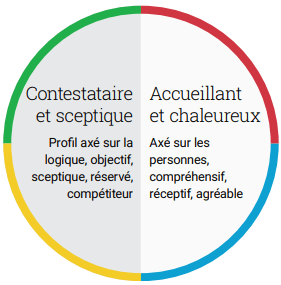
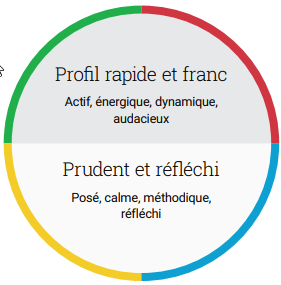
The current understanding of Everything DiSC by Wiley incorporates some of Marston's core principles, along with additions and changes brought about by advances in psychological measurement and theory.
DiSC is often compared to the MBTI®. To understand what sets them apart and which one to choose, read our article DiSC or MBTI: Which Tool Should You Choose Based on Your Needs?
WHY MEASURE HUMAN BEHAVIOR?
Our work environment is changing at an unprecedented pace: automation, disruption, and innovation make it difficult to keep up. Amid this uncertainty, companies must focus all their attention on their most valuable resource: people.
With EverythingDiSC®, get to know your workforce better and strengthen your company's culture.
“Participants were able to immediately put what they had learned into practice and quickly improve their effectiveness. The managers who took part in this program now have a better understanding of their role, more tools to help them perform, and a greater impact on their work and their team.”

— S.G., Country Manager, H&M Hennes & Mauritz