You’ve just obtained your Everything DiSC® certification. Access to EPIC is open, the Wiley resources are available, and you’re now qualified to facilitate. So what next?
It’s often at this point that your initial enthusiasm is met with the first practical question: where do I start? Here’s a practical guide to turning your certification into real-world practice.
1. Run your first workshop within 30 days
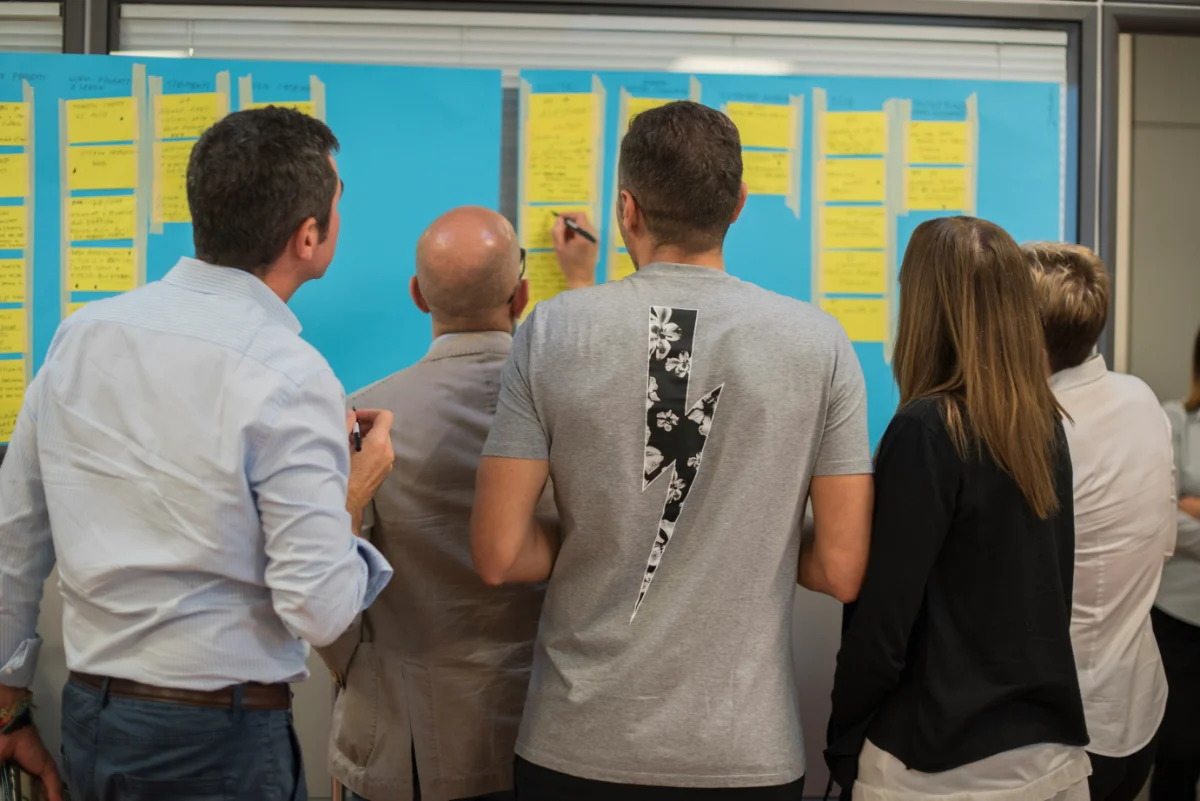
The most important rule after gaining your certification: don’t wait. Every week without practice is a week in which the skills you learnt on the course start to fade. Set a date within 30 days of your certification — even if it’s just for a small group, even in an informal setting.
A pilot workshop with volunteer colleagues or a group you know well is ideal. The aim isn’t perfection — it’s to take the plunge and discover what works for you.
2. Choisissez le bon profil pour démarrer
Everything DiSC® Workplace is generally the best place to start for a first workshop. Its content is accessible, the target audience is broad (anyone who works in a team), and the Wiley facilitation modules are clearly structured.
Save the Management, Work of Leaders or Sales profiles for more specific audiences — once you’ve got a few Workplace workshops under your belt.
3. Make use of Wiley’s resources without overburdening them
Wiley provides comprehensive facilitation kits: slideshows, activities, facilitator’s guides and Catalyst videos. It’s a valuable resource — but don’t try to use everything in your very first workshop. Choose two or three key activities, get to grips with them, and build on that.
A lively two-hour workshop is better than a whole day that’s poorly run.
4. Prepare your answers to tricky questions
Certain questions crop up time and time again in DiSC workshops. Be prepared for them:
- "Can we change our style?" — Yes, the appropriate style evolves, whilst the natural style is more stable
- "Is my style good or bad?" — DiSC does not favour one style over another; each has its own strengths
- "What’s the difference between this and the MBTI?" — They are two different tools; DiSC focuses on observable behaviours
- "What if someone refuses to take part?" — DiSC is a voluntary tool, not a compulsory personality test
Avoir ces réponses prêtes vous donnera confiance — même si les questions ne viennent pas toujours.
5. Establish a systematic feedback process
Après chaque atelier, notez ce qui a bien fonctionné, ce qui a moins bien marché, et une chose que vous ferez différemment la prochaine fois. Ce journal de bord simple est l'outil de développement le plus efficace pour un facilitateur débutant.
You should also talk to other facilitators — the DiSC community is active, and a peer’s perspective is often more helpful than further training.
6. Build up your offering gradually
If you’re working as an independent consultant or coach, avoid presenting an overly broad range of services right from the start. Begin with a standard workshop that you’re fully familiar with and can describe in two sentences. This is more credible — and easier to sell — than a catalogue of all the possible applications of DiSC.
Specialisation will come naturally with practice.
Would you like an outside perspective on your first workshop session, or some help in structuring your DiSC programme? Contact us — this is exactly the sort of support we offer after certification.
Free guide
Get our free guide “DiSC at work”
The 4 styles, how to recognise them and how to adapt your communication from tomorrow. 5 pages, 15 minutes of reading.