DiSC is often described as one of the most useful tools for understanding how people work together. Yet a number of misconceptions persist — some trivial, others genuinely misleading. Here is what the research actually says.
Misconception #1: DiSC and DISC are the same thing
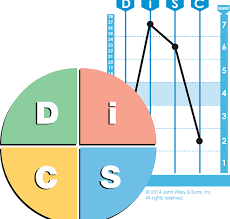
There are many "DISC" assessments on the market — generic tools that use Marston's original framework but without the scientific validation behind it. Everything DiSC®, published by Wiley, is not the same product. It is built on decades of research, uses an adaptive testing algorithm, and is validated across cultures and sectors.
The truth: The name matters. Everything DiSC® and a generic "DISC" test are not equivalent — in terms of reliability, depth, or the quality of insight they provide.
Misconception #2: DiSC puts you in a box

A common concern: "I don't want to be reduced to a letter." And it's a fair one — if DiSC were a rigid classification system. But it isn't. Everything DiSC® places each person on a circular continuum. No two profiles are identical. Your dot's position reflects the nuance of how you tend to approach situations — not a fixed category.
The truth: DiSC describes tendencies, not identities. It is a starting point for self-awareness, not an end point for judgment.
Misconception #3: Your DiSC style never changes
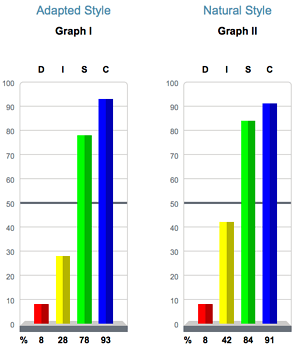
Everything DiSC® distinguishes between your natural style — how you tend to show up when you're at ease — and your adapted style, which reflects how you adjust to the demands of a given context. Both can shift over time, particularly after major life or career changes.
The truth: Your core tendencies are relatively stable, but DiSC is not a destiny. People grow, contexts change, and awareness itself is a form of development.
Misconception #4: Some DiSC styles are better than others
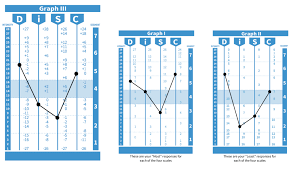
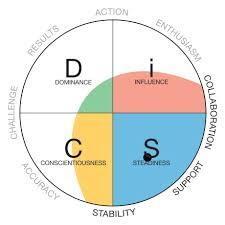
Each of the four DiSC styles — D, i, S, and C — brings distinct strengths to a team. A D-style person drives results; an i-style builds energy and connection; an S-style ensures stability and consistency; a C-style brings precision and rigor. No style is superior. What varies is fit to context — and great teams typically benefit from the full range.
The truth: There is no "best" DiSC style. Every style adds value. The goal is not to change who you are, but to understand how your tendencies interact with those of others.
Misconception #5: DiSC predicts job performance
Everything DiSC® was never designed as a selection tool. Using it in hiring decisions is both a misuse of the instrument and, in many jurisdictions, a legal risk. DiSC describes behavioral tendencies — it does not measure competence, intelligence, motivation, or potential performance in a specific role.
The truth: DiSC is a development tool, not a predictive one. Its value lies in deepening self-awareness and improving how people work together — not in sorting candidates.
Misconception #6: DiSC is just for training days, not for day-to-day work
The real value of Everything DiSC® doesn't show up in a workshop — it shows up the following Monday, when you adjust how you communicate with a colleague who tends toward a different style. Or when a manager gives feedback in a way that actually resonates. Or when a team navigates a disagreement without it becoming a conflict.
The truth: DiSC is only as useful as it is applied. Teams that integrate it into their regular conversations — not just their training calendar — see the most durable results.
A tool is only as good as the understanding behind it. If you'd like to explore how Everything DiSC® can genuinely strengthen your team's dynamics, we'd be happy to talk.
Free guide
Get our free guide “DiSC at work”
The 4 styles, how to recognise them and how to adapt your communication from tomorrow. 5 pages, 15 minutes of reading.